Technical Assessment of Failed Electronics in Kenya
Every Sinsal engagement starts with a technical assessment. It turns a report that equipment is not working into documented findings, a root cause where one can be established and a clear repair, refurbish or replace recommendation, before any repair is approved.
Service Overview
Most repair shops quote after a quick look. A technical assessment works the other way round: the equipment is received against a record, tested, inspected and diagnosed, and what is found is written down. You then decide with evidence whether to repair, refurbish, replace or return the equipment as it is.
The assessment can stand alone. Organisations use it to decide between repair and replacement, to understand a repeat failure, to support a warranty or supplier discussion, or to establish the condition of equipment before it is redeployed. Where you approve repair, the same record carries through the repair and the final verification.
Equipment We Work On
- Network equipment: switches, routers, access points and controllers
- Industrial boards: PLC, HMI, drive and control boards
- Power supplies, inverters and power conversion boards
- Medical equipment boards and power supplies (electrical assessment only)
- CCTV recorders, cameras and POS terminals
- Embedded boards and legacy equipment with no documentation
Typical Failures
- Equipment that does not power on, or that resets or shuts down
- Intermittent faults that appear only when warm or under load
- A repeat failure after one or more earlier repairs
- Damage from a surge, liquid ingress or heat with an unclear cause
- Equipment of unknown condition that is about to be redeployed or disposed of
Diagnostic Process
- 01Pre-test: the equipment is received against a record, its history and symptoms are written down, and its baseline behaviour is observed with current-limited power
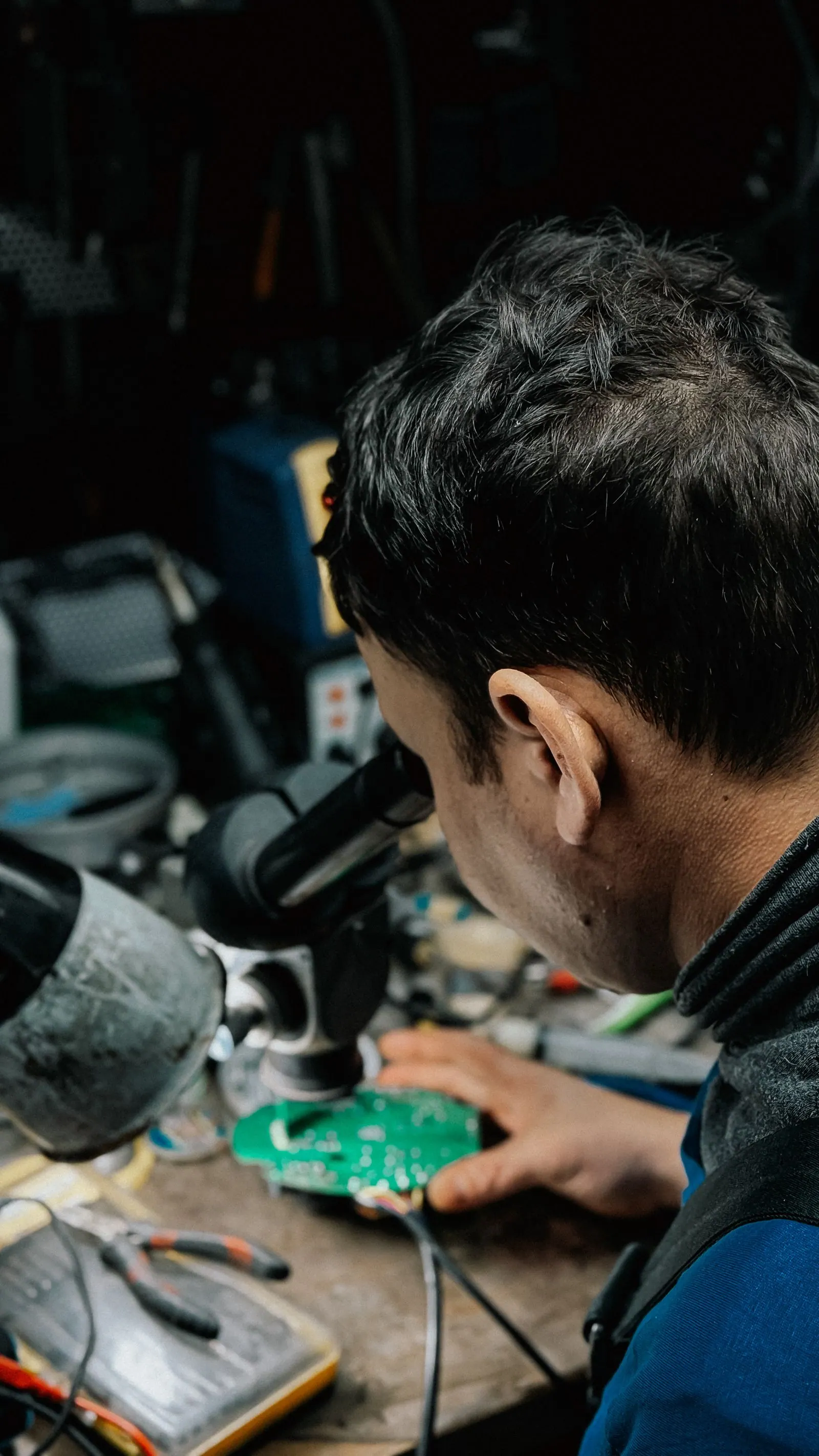
- 02Inspection: visual and microscope inspection of the board for burn marks, corrosion, lifted pads, cracked joints and signs of earlier repair
- 03Diagnosis: power-rail, signal and thermal measurements isolate the fault to a stage and then to a component
- 04Root-cause analysis: what stressed or damaged the failed part is examined, so the repair addresses the cause where one can be found
Repair Process
- 01Findings and a repairability recommendation are given before work is approved, including parts availability and the scope proposed
- 02On approval, the repair is carried out at the failed stage under magnification and recorded
Testing and Validation
- Parametric testing: rails, signals and interfaces are measured against the values expected of a healthy board
- Stress testing: the board is run warm, under load and for an extended period so marginal repairs and heat-related faults show up
- Final verification: the repaired equipment is re-checked after cooling and a fresh power-up before it is returned
- Technical report: findings, work done and tests performed are documented, with the limits of what was verified stated
What You May Receive
Documented findings, Repairability recommendation, Technical report, Repair record where work proceeds.
Warranty
Completed repairs are accompanied by warranty documentation. The cover, its term and its exclusions are written on the warranty document issued with the job, so they are agreed in writing for your equipment rather than assumed. Warranty applies to the repaired fault and the work carried out, not to unrelated failures elsewhere in the equipment.
Important Limitation
An assessment establishes what can be shown by inspection and measurement. A definitive root cause cannot be established in every case, and the report says how confident the conclusion is. It does not include calibration, regulatory certification, clinical release or functional-safety approval.
Common Questions
Can I request a technical assessment without agreeing to repair?
Yes. The assessment gives you documented findings and a recommendation. You then decide whether to repair, refurbish, replace or return the equipment.
What does the technical report contain?
The reported complaint, the condition on receipt, the diagnostic procedure and measurements, the findings, the root cause or probable cause, repairability and the recommended action. Completed work adds the repair record and the tests performed.
What should I send with the equipment?
A description of the fault and when it started, anything that happened beforehand such as a surge or liquid exposure, previous repair attempts, and any documentation you have. Photographs sent with the request help Sinsal advise before you deliver.
Ready to Have Equipment Assessed?
Describe the equipment and the fault. Sinsal will confirm whether it is a fit for diagnostics and repair before any work begins.
Already submitted equipment? Track your equipment