Why Industrial Electronics Fail
6 Oct 2026
Industrial electronics run harder than office equipment: longer hours, more heat, dirtier air and worse power. Most failures trace back to a small set of causes, and knowing which one applies decides both the repair and the prevention.
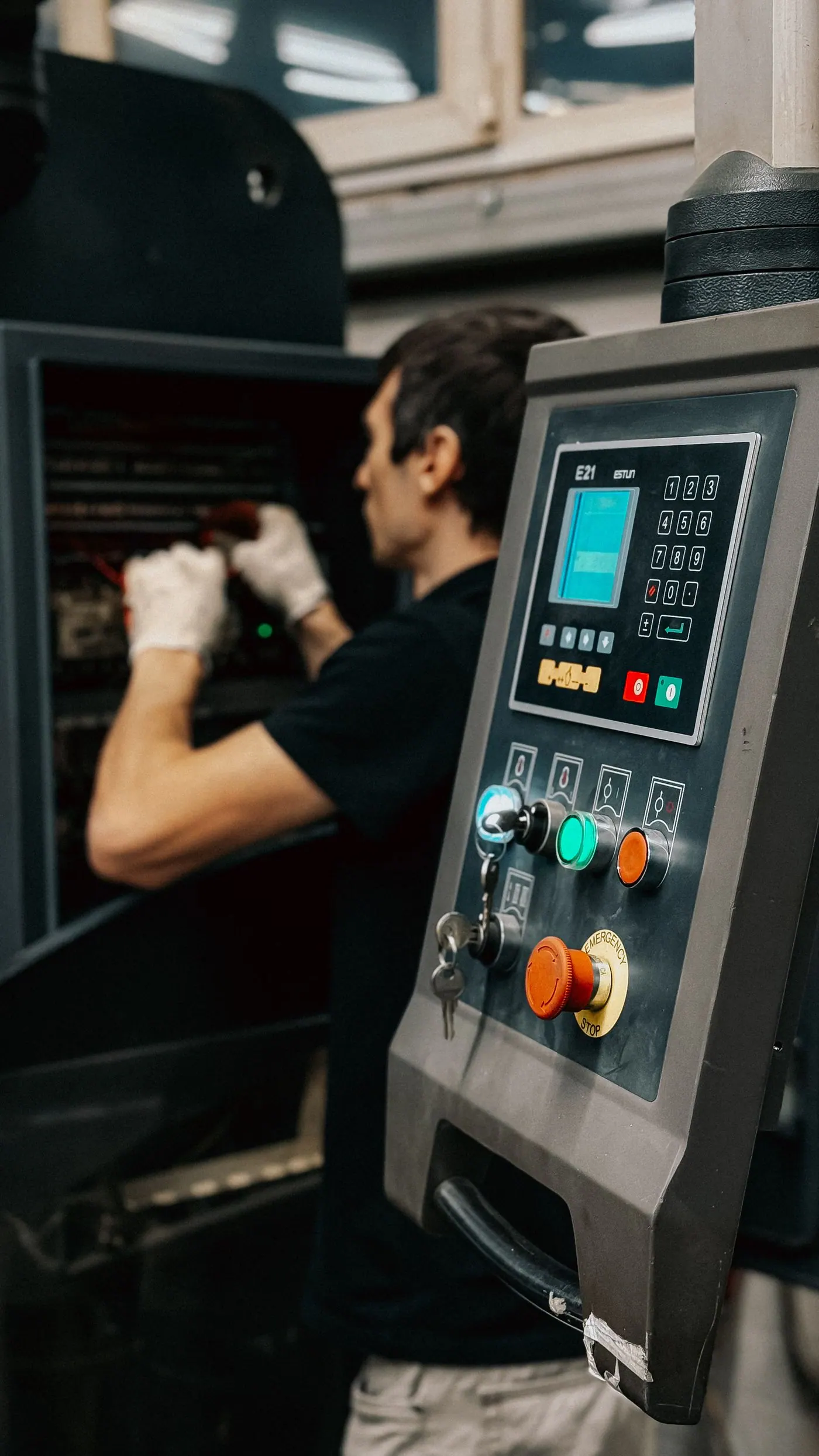
Heat is the most common stress
Electronic components have a life that shortens as they run hotter. Electrolytic capacitors in particular lose capacity and gain internal resistance faster at high temperature, which in turn makes them run hotter. Cabinets with blocked filters, failed fans or too many drives in one enclosure put boards under sustained thermal stress.
Thermal imaging of a running board is a practical way to see which parts are working hardest and whether a cabinet is cooling as intended.
Electrical stress from the supply and the load
Surges, voltage sags, switching transients from other equipment and overloads all stress the input and power stages first. A board may survive one event and fail weeks later because a protection part was weakened. Damage to the input stage is a common sign that the cause was electrical rather than a defect in the board.
Contamination and corrosion
Dust holds moisture and conducts. In plants with humid, dusty or chemical-laden air, boards develop leakage paths and corroded contacts. Intermittent faults that change with the weather often point here.
Vibration and mechanical fatigue
Heavy parts on a vibrating machine, connectors and cracked solder joints are the typical victims. The symptom is usually intermittent: the equipment works until it is touched or warms up.
Telling the causes apart
The pattern of damage is the evidence. Burned input components suggest a surge or overload. Browned boards and swollen capacitors suggest heat. Powdery residue suggests corrosion. Cracked joints around heavy parts suggest vibration. A good diagnosis records which pattern is present so the repair also addresses the cause where possible.
If the same board keeps failing, a failure-analysis assessment is more useful than a repeat repair.
Related Service
Industrial Electronics Repair in Kenya